




Ladbroke Grove
Dear Hans Keller,
I very much enjoyed meeting you at the Donats nearly a month ago. I knew I would because I have always enjoyed reading your writings, even though I also knew that talking to you would have the bracing effect of a brisk walk in a snowy wind rather than a stroll along the beach; you are not a comfortable person to talk to and thank God for that.
What you said to me then has bounced around in my skill ever since, and I hope you don't mind if I now report to you the scattered thoughts that it has provoked, especially in our glancing references to jazz. Now, I know that you are not interested in jazz and I can quite appreciate why, but I think you might be interested in why someone like me, who is (am ? ) thoroughly drenched in European concert music, should he drawn to jazz, More specifically, you asked me once or twice whether I did not feel that all music had a basic similarity whether improvised by a jazz musician or composed by a composer. And the answer to that, now that I have thought it over, is overwhelmingly no.
I am sure the answer lies in the fact that a music like jazz ( or flamenco, pibroch music, or the blues ) constitutes a language of its own. Languages tend to dictate or reflect the process of thought. A Frenchman thinks differently from an Englishman; a German speaker from both. You yourself sometimes use English in a way which only a German - speaker could - I remember an article in which you contrasted understanding and "overstanding" in a way which would only make sense to someone who had had experience of the Gerona language.
And jazz, for better or for worse, is a language which has to be understood on its own terms. Those terms are, I think, conversational in contrast to the literary terms of concert music. Beethoven writes; a jazz soloist talks. Now, writing endures, whereas talk fades into the air and vanishes when the talker goes home. If it were not for the fortuitous invention of the gramophone, jazz would hardly have a history and certainly no archives. As it is, the gramophone record has been a very mixed blessing for jazz; it has perpetuated, unchanged, sounds that should only have been heard once. But at least it has given a clear idea of the way jazz has arrived and changed.
And it is, I think, an example of a language which is profoundly antipathetic to your way of hearing. A composer is an architect who builds a structure, putting in all the steps without which his structure will fall down. But when a jazz musician plays a phrase, he knows what phrase the audience will excerpt next, so he plays a different one. The expected phrase is already present in their minds so he does ought reed to play it. He plays a variation on an unplayed variation.
I am sure you have had this experience with congenial conversationalists. You say something. You know the other person will say; Yes, but. So before he says it, you go on to the next step. Well, jazz is a bit like that. It is not an end product at all, it is a process. That is why Gershwin’s idea of jazz, as you explained it, is so irrelevant or at least talking about something completely different. Anything that can be repeated faithfully as jazz is not jazz at all.
I wouldn’t for one moment claim that jazz is better or worse than concert music, simply that it is very different. A jazz musician sets out to talk on a topic. That topic may be Gershwin’s The Man I Love. Often he talks balderdash, or repeats clichés he has mouthed before, or imitates previous talkers. But sometimes he is inspired and says things about The Man I Love which have never been thought of before and certainly not by Gershwin and never will be again. That’s all. They will never reach the height or profundity of a Beethoven Symphony, but then Beethoven will never talk in quite that way either.
You said to me at one point that a great deal of improvisation takes place in the playing of a Beethoven quartet. No doubt. But it is a completely different kind of improvisation. You would not expect when watching a West Ham game that the goals would occur at exactly the same place as the last game, even if at a different tempo. But that is how a Beethoven quartet works. (I think.) A real game of football provides an ebb and flow of action and reaction which is more like jazz. A Beethoven quartet does not allow for an inspired act of dribbling, long-range shot or disobedience to the manager’s strategy. Jazz does. That is what makes it fail so often and succeed so marvellously now and again.
From the way I have been talking you might imagine I thought jazz was the music of the future, but alas not; it is in the past already. Unless I am mistaken, jazz has been and gone. A language which has served its purpose and been replaced by something I find effective but cruder and duller. I feel the same about concert music, but more so. Where are the Schuberts and Mozarts and Brahms of today? The fact that more people than ever appreciate the musicality of Beethoven or Haydn is no compensation for the fact that today has not produced another Beethoven or Haydn. Jazz is dying; concert music is dead; all the rest is history. Well, that is not so very bad, as it is a great time for archaeologists, and the great pulse of history which archaeologists always ignore is still alive.
SOME OTHER DAY. It was very late when I wrote that last sentence and I can not see even now what I thought I meant. But before I send this letter off to you, and you toss it aside, or frown for a moment over it, let me add one or two other points about jazz which – for me- throw interesting sidelights on concert music.
The composer is not very important in jazz. There have not been many; there have been few good ones; and none of them has influenced the music strongly, with the possible exception of Duke Ellington. There have been no full-time composers in jazz. They have all been players as well, and have usually written for the bands they played in; more especially for the players in the bands they played in. That meant when the bands changed, such composers as Ellington and Charlie Mingus recomposed the numbers.
Jazz musicians do not on the whole write good melodies. Even strongly melodic improvisers do not write good melodies. That is because their style of improvising is different (more conversational again) from the style of writing melodies that very good American songwriters used. The vast majority of songs or tunes played by jazz musicians are non-jazz themes written by songwriters; very often it is not the themes that interest the jazz musicians as Gershwin has done too much of the work already, the work of the harmonic intricacy and rhythmic wit. (They prefer a simpler framework, just as humorists find it hard to write about something which is already intrinsically funny. )
Form has, if anything, become simpler through jazz’s history. Jazz of the late 1920’s followed the ragtime tradition and favoured compositions with up to four or five different sections. Pretty simple by concert standards, but quite tricky compared to later jazz which simplified the average number to a single repeated 32 bar sequence. They used that single sequence as the basis for some quite interesting structures through variations in tempo, key, mood and dynamics, but it wasn’t really architectural structure, more a sort of ebb-and-flow change.
Now, as I said before, none of this is likely to appeal to your musical ear. The sort of excellence you admire in music is the kind produced by geniuses who rise above the artistic shortcomings of any era. Jazz depends far more on the craftsman who brings his own particular variations to a language, even if they amount to no more than a new set of clichés. I think that temperamentally you are drawn to a different kind of music, and who can argue the rights or wrongs of temperament? I admire genius a great deal but I also think a world occupied by only genius is richly arid. Who wishes always to live on Everest?
I believe I’ve given the impression of someone who listens morning, noon and night to jazz but in fact I probably listen to more ‘classical’ music than anything else. My tastes are not extraordinary. I think Beethoven is a colossus (having disliked him till the age of 25). I think Mozart is over-rated but still wonderful. I prefer Schubert to all others. I think Chopin sings more beautifully than anyone. I find Lizst’s music as good as anything Houdini ever did, i.e. beguilingly meretricious. I do not like opera much, because the concert style of singing (I mean the Western classical style of singing) strikes me as unnervingly artificial, much as you might find jazz saxophone maddeningly self-indulgent. (Odd how certain sounds or combinations can hit a blind nerve. String quartets I love; violin plus piano and piano duets I find hard to take.) And so on.
Yet I find myself perpetually drawn to composers who are obviously not geniuses. Weber, in his non-operatic moments. Smetena, Borodin, Bizet, Dvorak, here and there. Oddballs like Hummel and Moscheles. CPE Bach. Even, God save us, Gottschalk. And I don’t think it’s just because I’m attracted directly to the second-rate – I think it is also a reflection of my jazz interest in the craftsman. Weber’s piano sonatas, for instance, have a different flavour from anyone else’s because he had a different mind; also, sometimes, because he had trouble with his left hand and I enjoy hearing how he solved the problem.
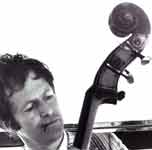
All I am trying to say in this rambling letter, dear Hans Keller, is that while I value the ice-cool and brain-hot analysis that you bring to music, I believe it is only one approach. You have derived a great deal from music which I shall never know. But I have enjoyed music in ways which you will never appreciate. There is nothing wrong with that. There are gulfs between cricket cognoscenti and football lovers which is not worth crossing… The other night I played bass in a band which Barry Fantoni got together for New Year’s Eve, a peculiarly successful session. None of us, except the pianist, was professional. And yet during the five hours we played together there was a growth and unity which gave me more satisfaction than I would have got from listening to or even playing the equivalent time-value of Hayden quartets. The Haydn would be better music; ours was better music-making. You would not believe this- why should you? Neither you nor I will ever know what a flamenco guitarist gets from his music. How can we? I accept entirely your joy in Beethoven and even Schoenberg. I am sorry you cannot accept the way I feel about jazz. But of course it does not affect the way I feel at all. You are right. And I am right. They are just different kinds of rightness.
If I don’t post this soon, I never shall.
One of the things about jazz that can annoy people most is the unrelenting tempo, which never varies, undergoes no rubato. It is absolutely necessary, of course, so that the infinitely varied shifts on top of the beat can take place that make the music swing. It doesn’t work if the underlying beat is varying also. Yehudi Menuhin was once asked on televison by Oscar Peterson if he didn’t find the unvarying beat of a jazz rhythm too constricting. On the contrary, he said; he had never felt so free in all his musical life.
I noticed today that you added a letter to the Anthony Burgess brouhaha. But you two, too, are talking different languages. You have nothing to say to each other. You are talking about different Beethovens. You, of course, are absolutely right. But he may be as well. Unfortunately the whole subject has religious overtones. I read recently a theory by a psychiatrist that religion has been replaced for many people by music, and it certainly rings true when I see people crying: No, mine is the true, the only Beethoven!
Jazz is a more modest musical language than Beethoven’s tradition. I think modesty may be a quality we need more of.
You are too busy a man to bother replying to this letter, but I hope you will think about it en passant, at least to the extent of admitting that different kinds of music can be different, and radically different. I love concert music. I love jazz. Neither has much to learn from the other. What can an architect learn from a conversationalist, an actor from a footballer?
Now, back to Beethoven. Please give my regards to your wife
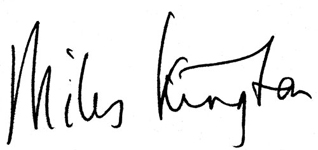
Yours sincerely
I very much enjoyed meeting you at the Donats nearly a month ago. I knew I would because I have always enjoyed reading your writings, even though I also knew that talking to you would have the bracing effect of a brisk walk in a snowy wind rather than a stroll along the beach; you are not a comfortable person to talk to and thank God for that.
What you said to me then has bounced around in my skill ever since, and I hope you don't mind if I now report to you the scattered thoughts that it has provoked, especially in our glancing references to jazz. Now, I know that you are not interested in jazz and I can quite appreciate why, but I think you might be interested in why someone like me, who is (am ? ) thoroughly drenched in European concert music, should he drawn to jazz, More specifically, you asked me once or twice whether I did not feel that all music had a basic similarity whether improvised by a jazz musician or composed by a composer. And the answer to that, now that I have thought it over, is overwhelmingly no.
I am sure the answer lies in the fact that a music like jazz ( or flamenco, pibroch music, or the blues ) constitutes a language of its own. Languages tend to dictate or reflect the process of thought. A Frenchman thinks differently from an Englishman; a German speaker from both. You yourself sometimes use English in a way which only a German - speaker could - I remember an article in which you contrasted understanding and "overstanding" in a way which would only make sense to someone who had had experience of the Gerona language.
And jazz, for better or for worse, is a language which has to be understood on its own terms. Those terms are, I think, conversational in contrast to the literary terms of concert music. Beethoven writes; a jazz soloist talks. Now, writing endures, whereas talk fades into the air and vanishes when the talker goes home. If it were not for the fortuitous invention of the gramophone, jazz would hardly have a history and certainly no archives. As it is, the gramophone record has been a very mixed blessing for jazz; it has perpetuated, unchanged, sounds that should only have been heard once. But at least it has given a clear idea of the way jazz has arrived and changed.
And it is, I think, an example of a language which is profoundly antipathetic to your way of hearing. A composer is an architect who builds a structure, putting in all the steps without which his structure will fall down. But when a jazz musician plays a phrase, he knows what phrase the audience will excerpt next, so he plays a different one. The expected phrase is already present in their minds so he does ought reed to play it. He plays a variation on an unplayed variation.
I am sure you have had this experience with congenial conversationalists. You say something. You know the other person will say; Yes, but. So before he says it, you go on to the next step. Well, jazz is a bit like that. It is not an end product at all, it is a process. That is why Gershwin’s idea of jazz, as you explained it, is so irrelevant or at least talking about something completely different. Anything that can be repeated faithfully as jazz is not jazz at all.
I wouldn’t for one moment claim that jazz is better or worse than concert music, simply that it is very different. A jazz musician sets out to talk on a topic. That topic may be Gershwin’s The Man I Love. Often he talks balderdash, or repeats clichés he has mouthed before, or imitates previous talkers. But sometimes he is inspired and says things about The Man I Love which have never been thought of before and certainly not by Gershwin and never will be again. That’s all. They will never reach the height or profundity of a Beethoven Symphony, but then Beethoven will never talk in quite that way either.
You said to me at one point that a great deal of improvisation takes place in the playing of a Beethoven quartet. No doubt. But it is a completely different kind of improvisation. You would not expect when watching a West Ham game that the goals would occur at exactly the same place as the last game, even if at a different tempo. But that is how a Beethoven quartet works. (I think.) A real game of football provides an ebb and flow of action and reaction which is more like jazz. A Beethoven quartet does not allow for an inspired act of dribbling, long-range shot or disobedience to the manager’s strategy. Jazz does. That is what makes it fail so often and succeed so marvellously now and again.
From the way I have been talking you might imagine I thought jazz was the music of the future, but alas not; it is in the past already. Unless I am mistaken, jazz has been and gone. A language which has served its purpose and been replaced by something I find effective but cruder and duller. I feel the same about concert music, but more so. Where are the Schuberts and Mozarts and Brahms of today? The fact that more people than ever appreciate the musicality of Beethoven or Haydn is no compensation for the fact that today has not produced another Beethoven or Haydn. Jazz is dying; concert music is dead; all the rest is history. Well, that is not so very bad, as it is a great time for archaeologists, and the great pulse of history which archaeologists always ignore is still alive.
SOME OTHER DAY. It was very late when I wrote that last sentence and I can not see even now what I thought I meant. But before I send this letter off to you, and you toss it aside, or frown for a moment over it, let me add one or two other points about jazz which – for me- throw interesting sidelights on concert music.
The composer is not very important in jazz. There have not been many; there have been few good ones; and none of them has influenced the music strongly, with the possible exception of Duke Ellington. There have been no full-time composers in jazz. They have all been players as well, and have usually written for the bands they played in; more especially for the players in the bands they played in. That meant when the bands changed, such composers as Ellington and Charlie Mingus recomposed the numbers.
Jazz musicians do not on the whole write good melodies. Even strongly melodic improvisers do not write good melodies. That is because their style of improvising is different (more conversational again) from the style of writing melodies that very good American songwriters used. The vast majority of songs or tunes played by jazz musicians are non-jazz themes written by songwriters; very often it is not the themes that interest the jazz musicians as Gershwin has done too much of the work already, the work of the harmonic intricacy and rhythmic wit. (They prefer a simpler framework, just as humorists find it hard to write about something which is already intrinsically funny. )
Form has, if anything, become simpler through jazz’s history. Jazz of the late 1920’s followed the ragtime tradition and favoured compositions with up to four or five different sections. Pretty simple by concert standards, but quite tricky compared to later jazz which simplified the average number to a single repeated 32 bar sequence. They used that single sequence as the basis for some quite interesting structures through variations in tempo, key, mood and dynamics, but it wasn’t really architectural structure, more a sort of ebb-and-flow change.
Now, as I said before, none of this is likely to appeal to your musical ear. The sort of excellence you admire in music is the kind produced by geniuses who rise above the artistic shortcomings of any era. Jazz depends far more on the craftsman who brings his own particular variations to a language, even if they amount to no more than a new set of clichés. I think that temperamentally you are drawn to a different kind of music, and who can argue the rights or wrongs of temperament? I admire genius a great deal but I also think a world occupied by only genius is richly arid. Who wishes always to live on Everest?
I believe I’ve given the impression of someone who listens morning, noon and night to jazz but in fact I probably listen to more ‘classical’ music than anything else. My tastes are not extraordinary. I think Beethoven is a colossus (having disliked him till the age of 25). I think Mozart is over-rated but still wonderful. I prefer Schubert to all others. I think Chopin sings more beautifully than anyone. I find Lizst’s music as good as anything Houdini ever did, i.e. beguilingly meretricious. I do not like opera much, because the concert style of singing (I mean the Western classical style of singing) strikes me as unnervingly artificial, much as you might find jazz saxophone maddeningly self-indulgent. (Odd how certain sounds or combinations can hit a blind nerve. String quartets I love; violin plus piano and piano duets I find hard to take.) And so on.
Yet I find myself perpetually drawn to composers who are obviously not geniuses. Weber, in his non-operatic moments. Smetena, Borodin, Bizet, Dvorak, here and there. Oddballs like Hummel and Moscheles. CPE Bach. Even, God save us, Gottschalk. And I don’t think it’s just because I’m attracted directly to the second-rate – I think it is also a reflection of my jazz interest in the craftsman. Weber’s piano sonatas, for instance, have a different flavour from anyone else’s because he had a different mind; also, sometimes, because he had trouble with his left hand and I enjoy hearing how he solved the problem.
All I am trying to say in this rambling letter, dear Hans Keller, is that while I value the ice-cool and brain-hot analysis that you bring to music, I believe it is only one approach. You have derived a great deal from music which I shall never know. But I have enjoyed music in ways which you will never appreciate. There is nothing wrong with that. There are gulfs between cricket cognoscenti and football lovers which is not worth crossing… The other night I played bass in a band which Barry Fantoni got together for New Year’s Eve, a peculiarly successful session. None of us, except the pianist, was professional. And yet during the five hours we played together there was a growth and unity which gave me more satisfaction than I would have got from listening to or even playing the equivalent time-value of Hayden quartets. The Haydn would be better music; ours was better music-making. You would not believe this- why should you? Neither you nor I will ever know what a flamenco guitarist gets from his music. How can we? I accept entirely your joy in Beethoven and even Schoenberg. I am sorry you cannot accept the way I feel about jazz. But of course it does not affect the way I feel at all. You are right. And I am right. They are just different kinds of rightness.
If I don’t post this soon, I never shall.
One of the things about jazz that can annoy people most is the unrelenting tempo, which never varies, undergoes no rubato. It is absolutely necessary, of course, so that the infinitely varied shifts on top of the beat can take place that make the music swing. It doesn’t work if the underlying beat is varying also. Yehudi Menuhin was once asked on televison by Oscar Peterson if he didn’t find the unvarying beat of a jazz rhythm too constricting. On the contrary, he said; he had never felt so free in all his musical life.
I noticed today that you added a letter to the Anthony Burgess brouhaha. But you two, too, are talking different languages. You have nothing to say to each other. You are talking about different Beethovens. You, of course, are absolutely right. But he may be as well. Unfortunately the whole subject has religious overtones. I read recently a theory by a psychiatrist that religion has been replaced for many people by music, and it certainly rings true when I see people crying: No, mine is the true, the only Beethoven!
Jazz is a more modest musical language than Beethoven’s tradition. I think modesty may be a quality we need more of.
You are too busy a man to bother replying to this letter, but I hope you will think about it en passant, at least to the extent of admitting that different kinds of music can be different, and radically different. I love concert music. I love jazz. Neither has much to learn from the other. What can an architect learn from a conversationalist, an actor from a footballer?
Now, back to Beethoven. Please give my regards to your wife
Yours sincerely